 Skip to content
Compare the build, then compare the quote
Flashing Acrylic vs PCB LED Pins: Shape, Artwork & Lighting
Compare flashing acrylic and PCB LED pins by the finished construction: front artwork, cut shape, visible light points, attachment and battery access. Ask what the customer will actually see and wear. A printed sticker and epoxy face can conceal a circuit-board base, so the proof needs to show more than a material label.
LogoBlinkee’s core custom light-up pins use a PC-board base. This guide helps you compare that format with an acrylic pin offer. It does not describe an acrylic product as a confirmed LogoBlinkee offering.
Get a PCB-based logo pin quote Prepare an acrylic pin brief
Acrylic and PCB describe different parts of a product
Acrylic refers to a material that may be used for a pin’s printed face or panel. PCB means printed circuit board: the base that supports electrical connections and components. A light-up product can contain both a decorative acrylic part and a circuit board. Treat the terms as a starting point for questions, rather than assuming every listing describes two mutually exclusive constructions.
Ask the supplier what forms the visible front, which parts define the outer shape, where the LEDs sit, and what the reverse looks like. If appearance is important, request a relevant sample or clear front-and-back views of the proposed format.
| Decision | For an acrylic pin offer | For a LogoBlinkee PCB-based pin |
|---|---|---|
| Visible material | Confirm the acrylic face, its finish, and how the print is applied. | Review the printed board-based design and the finish in the proposed build. |
| Outline | Ask which standard or custom-cut shapes are available for your configuration. | Develop the proposed outline around your logo, artwork, and component layout. |
| Lighting | Confirm whether components, a panel effect, or another arrangement produce the light. | Review the intended LED locations and effect with the artwork. |
| Reverse and fixing | Request the back view, power arrangement, and selected attachment. | Confirm the back layout and attachment as part of the specification. |
| Price and deadline | Quote the actual size, quantity, options, and delivery requirement. | Request a project-specific quote for the same brief. |
Both formats can involve custom artwork and shapes
Do not choose on the assumption that acrylic always means a stock circle, or that custom outlines belong to only one material. The important question is whether the supplier’s proposed shape preserves your logo and leaves room for the lighting and back hardware.
Likewise, a full-color print does not establish the LED colors, the lighting sequence, or how readable the artwork will be when illuminated. Compare those decisions separately. Mark the element that should attract attention first, then check the proposed drawing at finished size.
See a real PCB-based example
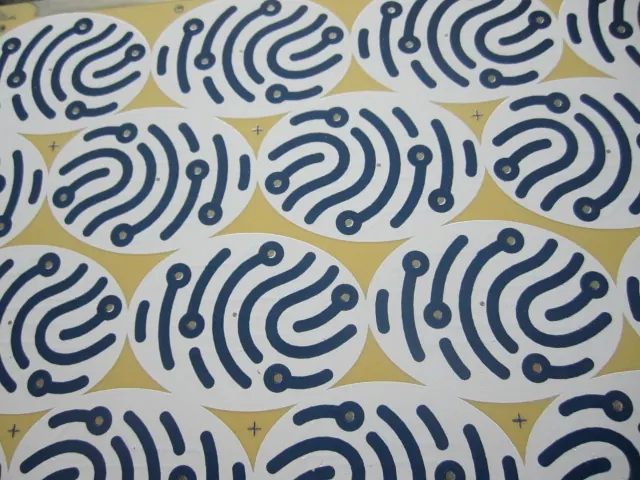
The Vivitouch fingerprint project also includes a lighting drawing and an animation. Together, those views give a more useful picture of a custom build than the finished glow alone.
Use one specification to compare suppliers
Send the same artwork, quantity per design, desired dimensions, lighting preferences, attachment, packaging, and in-hands date to each supplier. Ask each quote to identify its construction and included options. Compare the complete delivered total alongside the proof.
There is no universal winner on price, durability, brightness, or turnaround based only on the words acrylic and PCB. Those outcomes depend on the actual design, components, specification, and order. Ask for evidence relevant to the format being offered.
Compare suppliers and product formats separately
If you are considering specific vendors, our supplier comparison hub includes guides for Imprint Now, Lapel Pin Now, Custom Keychain Now, and Custom Coasters Now.
Questions before choosing
Is every acrylic pin a light-up pin?
No. Confirm that the selected item includes lighting, power, and the effect you want. A printed acrylic pin and a flashing acrylic pin are different specifications.
Does an acrylic description mean there is no circuit board?
No. Ask how the lighting is powered and supported. The front material alone does not describe the complete electronics or back assembly.
Can LogoBlinkee quote the same idea in its own format?
Share the artwork and the visual effect you want. We can discuss a PCB-based light-up interpretation, with its construction identified in the quote and proof. Do not assume it will reproduce another supplier’s material or surface finish.
Choose the result you need, then review the build
Send your logo, quantity, event date, and the detail you want to illuminate. We can help you explore the LogoBlinkee option and the decisions that need approval.